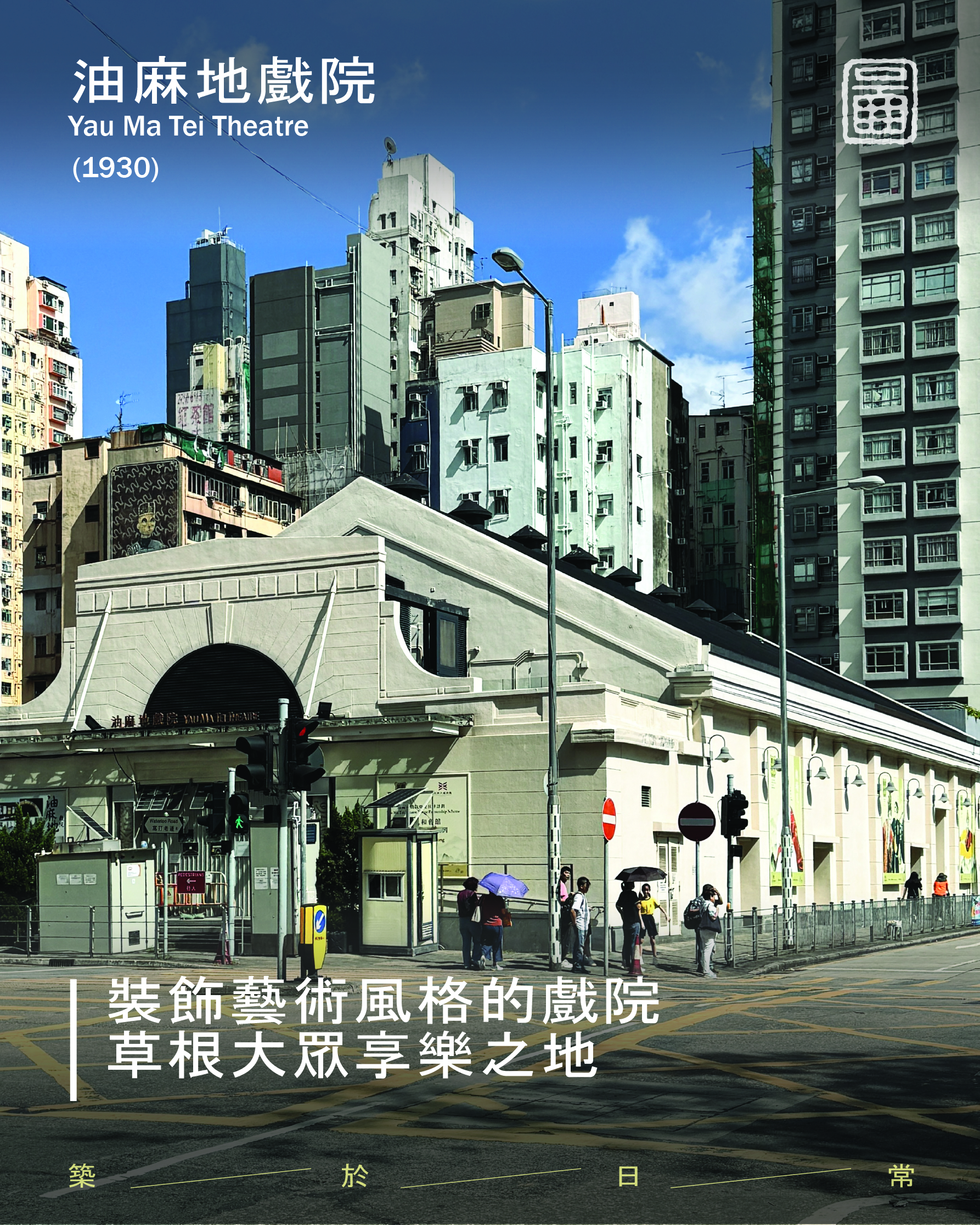

Yau Ma Tei Cinema in Art Deco Style: A get-away place for the Grassroots
Date: 14 January 2026
In twentieth-century Hong Kong, cinemas were important cultural landmarks. Regardless of wealth, “let’s watch a movie” was an everyday pleasure for the general public. Today, only three cinemas are preserved as historic buildings: Yau Ma Tei Cinema, Cheung Chau Theatre, and State Theatre.
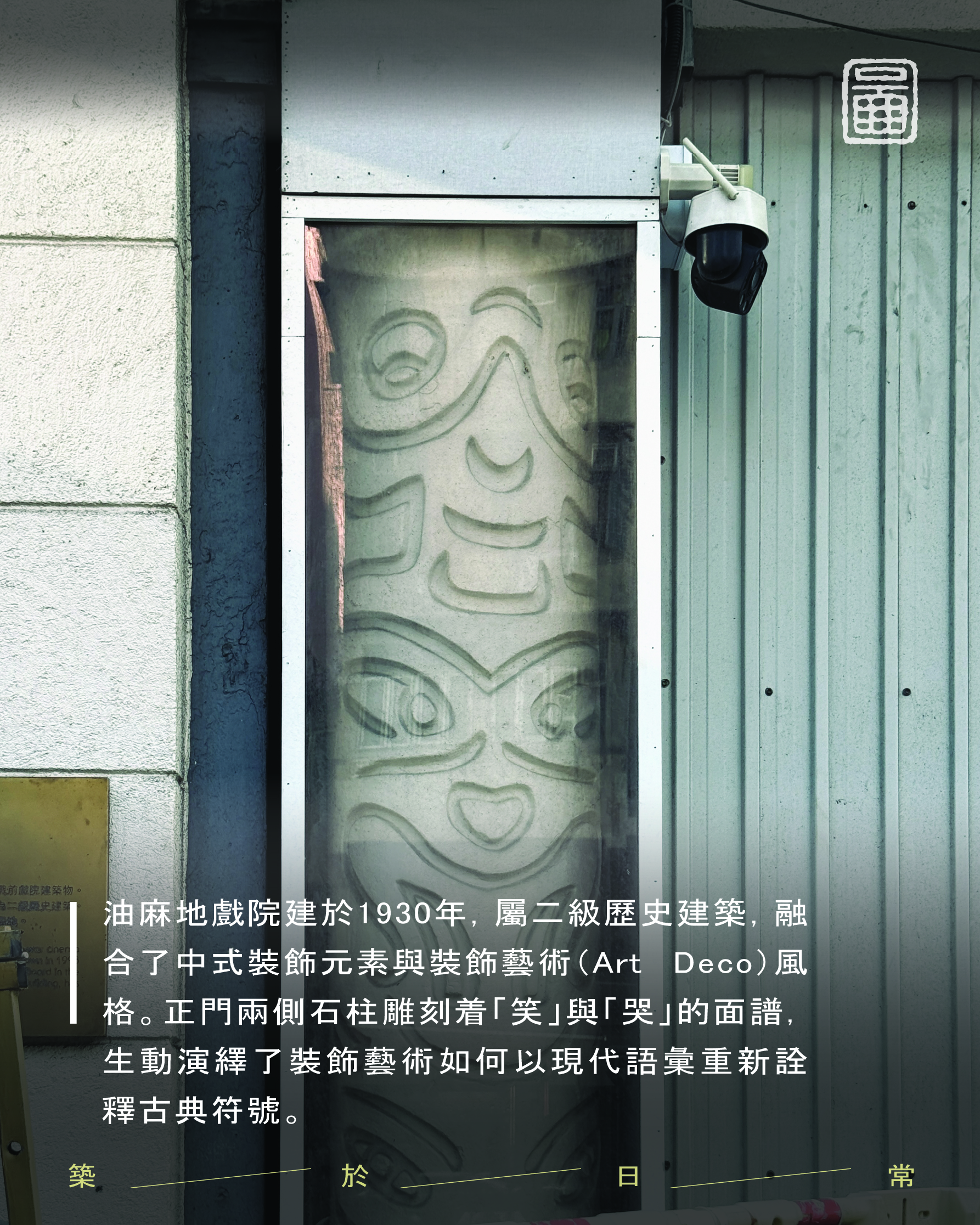
Yau Ma Tei Cinema, built in 1930, is a Grade II historic building that combines Chinese decorative motifs with the Art Deco style. The two stone pillars flanking the main entrance are carved with “smiling” and “crying” masks, vividly illustrating how Art Deco reinterpreted classical symbols in a modern language. At the time, Yau Ma Tei was one of the earliest developed communities in the Kowloon Peninsula, located near both the wharves and the still-operating fruit market. The cinema therefore became a key entertainment venue for dock workers, fruit market laborers, boatmen, and rickshaw pullers. At its peak, there were at least five cinemas in the Yau Ma Tei area alone, demonstrating how integral cinemas were to everyday life.
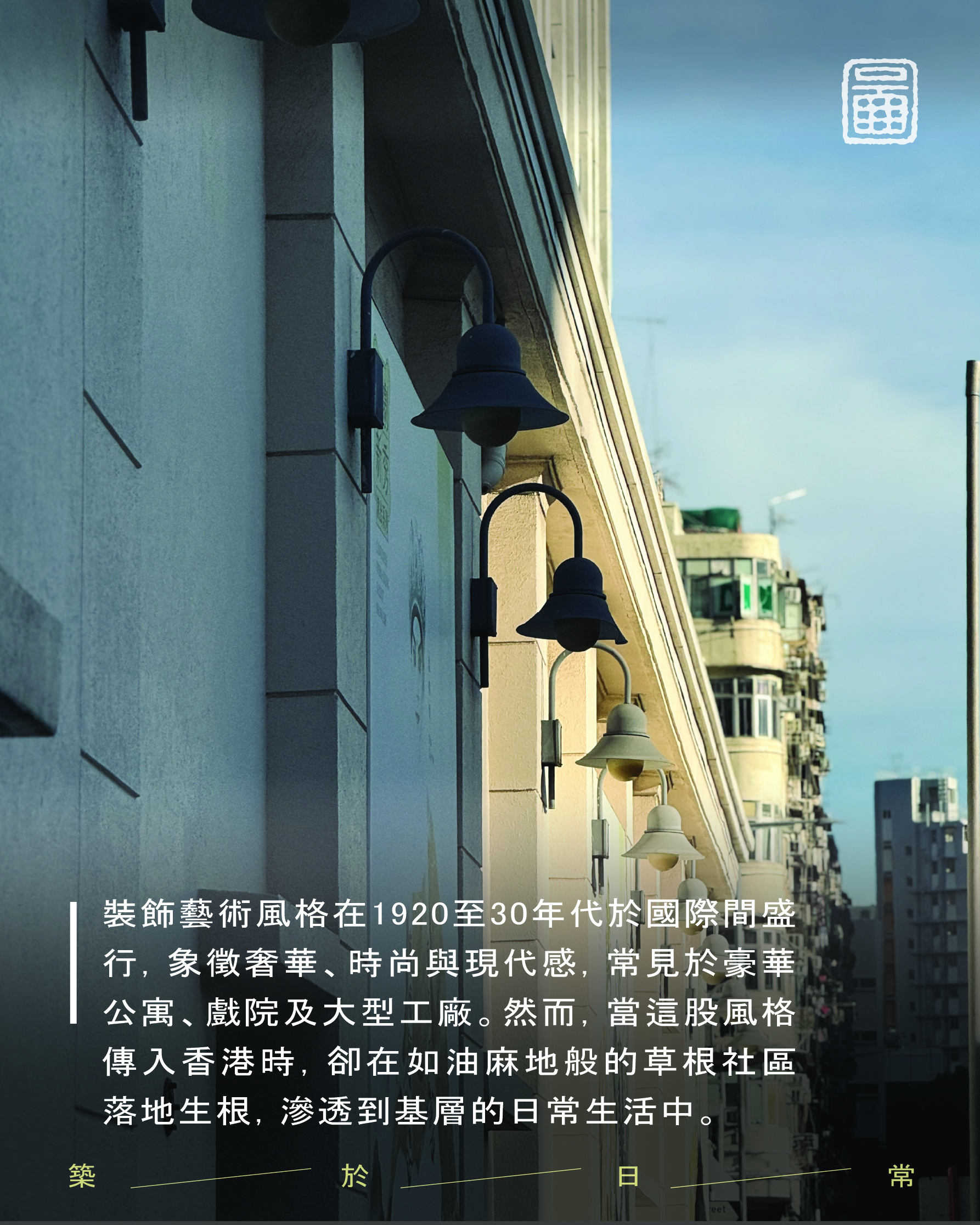
The Art Deco style, which flourished internationally in the 1920s and 1930s, symbolised luxury, fashion, and modernity, and was commonly applied to commercial buildings, luxury apartments, cinemas, and large factories. When the style arrived in Hong Kong, however, it took root in grassroots communities like Yau Ma Tei. It was not just a language of elite luxury; it permeated the daily lives of ordinary residents. Dock workers, fruit vendors, and neighborhood residents could all enjoy films while immersed in a space that harmoniously blended international aesthetics with the local community. This interplay of “global style” and “grassroots life” makes Hong Kong’s surviving Art Deco cinemas uniquely valuable cultural heritage.
Today, Yau Ma Tei Cinema has been revitalised as a Chinese opera centre, serving to promote Cantonese opera and train new talent, ensuring that the building’s spirit continues into the present.
Text and Photography: @kongcept852 (Commissioned by HKIA)