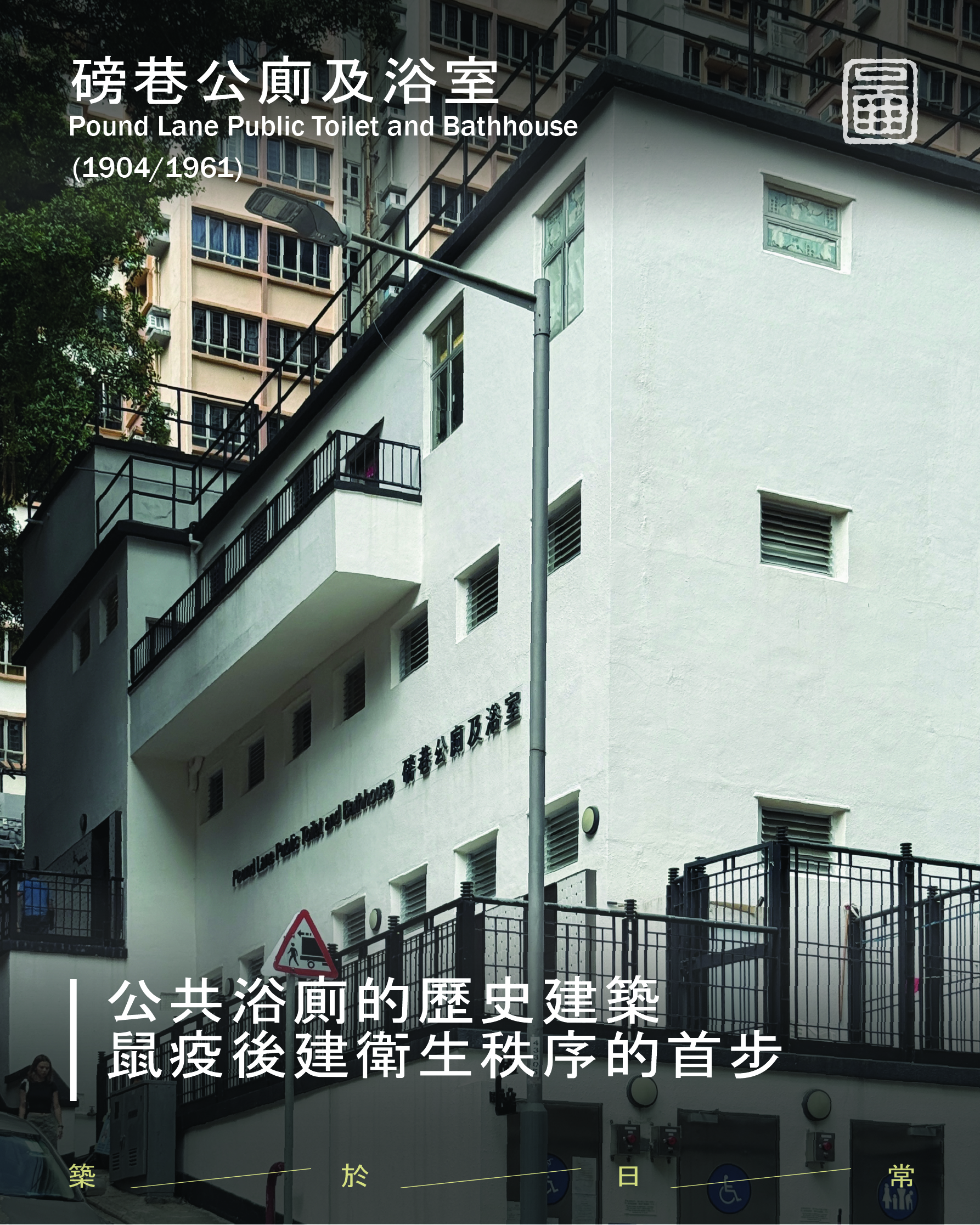

Public Bathhouses as Historic Architecture — the first step towards sanitary order after the plague.
Date: 11 February 2026
Today, having a private bathroom feels entirely natural. Yet just over a century ago, Hong Kong was far from such comfort. In the 1890s, squatter huts were the everyday reality for most Chinese residents. Families often bathed by wiping down with water in a basin in the kitchen or outside the house. Toilets were makeshift — wooden or metal buckets, or simple pits dug in the ground, covered with planks and a layer of soil after use. It was precisely under these conditions that plague struck, exposing the city’s fragile hygiene system. To restore order and improve public health, the government constructed the Pound Lane Public Bathhouse. In the midst of a ramshackle squatter settlement, a facility offering free hot and cold water, clean bathing spaces, and orderly planning emerged — an intervention that scrubbed at least part of the dirt away from a community in crisis.
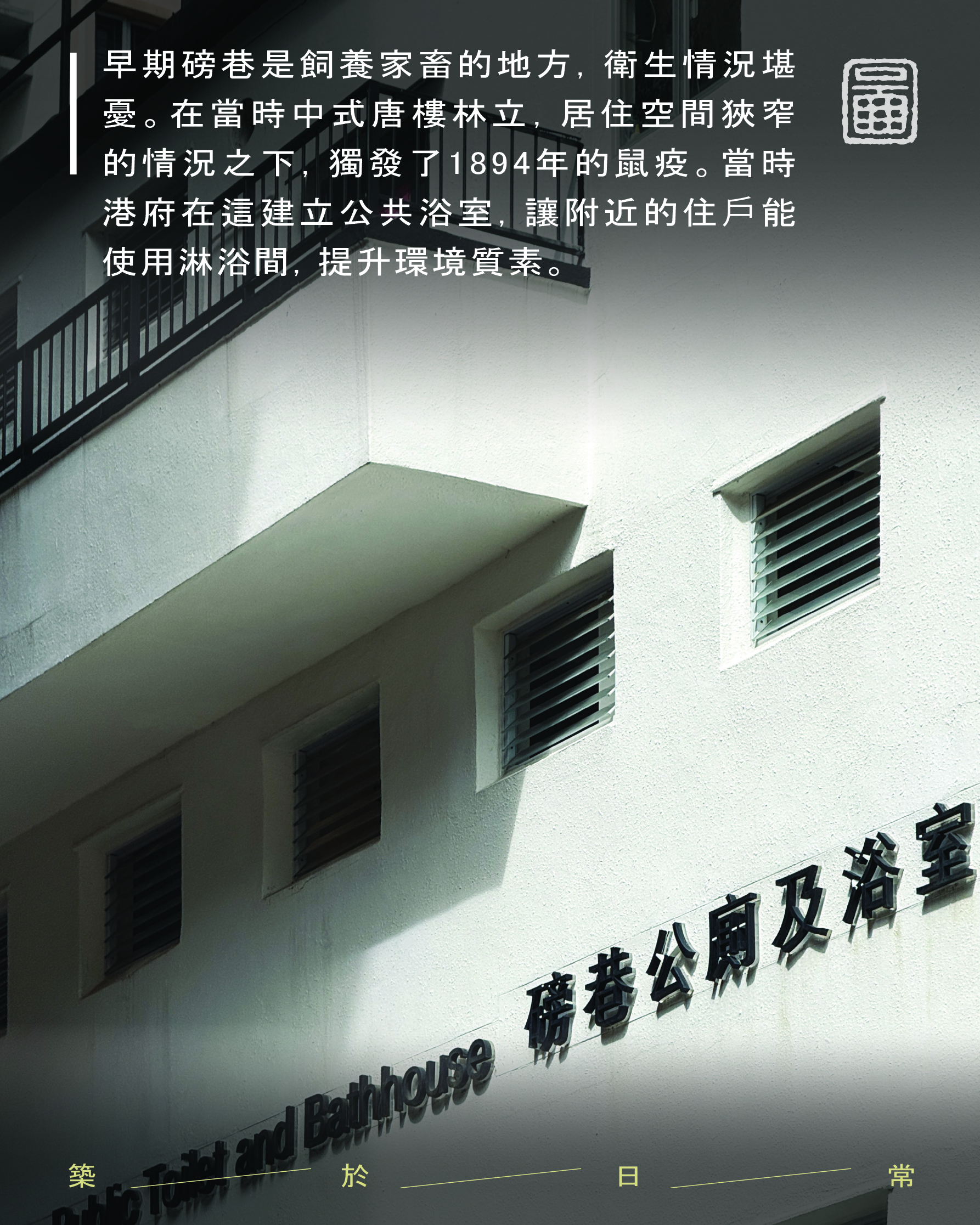
But why Pound Lane? This was no ordinary back alley. In its early days, Pound Lane was a place for livestock keeping, where almost every household raised pigs, creating a highly unsanitary environment. At the same time, tong lau crowded the neighbourhood, living quarters were cramped, and both water supply and toilets were scarce. Keeping clean was a daily challenge. The outbreak of plague in 1894 was closely tied to these sanitary conditions. In response, the government decided to establish a public bathhouse on Pound Lane, giving nearby residents access to showers and improving the area’s environment. The Pound Lane Bathhouse officially opened in 1904.
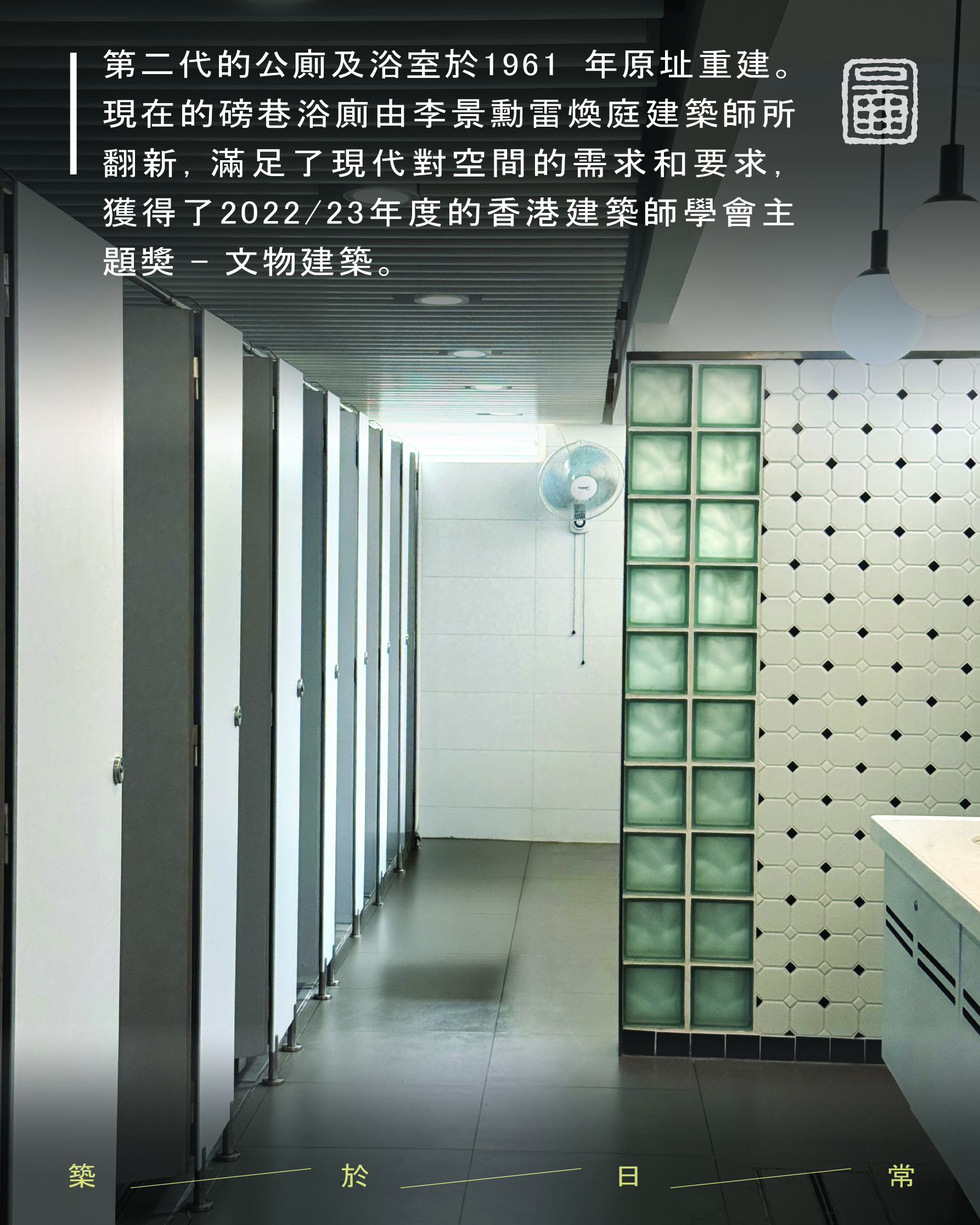
Although the 1904 bathhouse contained only 28 cubicles for men and 10 for women, its impact was remarkable. In an era when plague cases spread widely and the air was thick with smoke and disinfectant, a clean, orderly public bathhouse was a powerful contrast. It offered residents not just hygiene, but also some measure of reassurance as they washed away the fatigue of daily life. The facility was demolished in 1961 and rebuilt on the same site as a public toilet and bathhouse.
The current Pound Lane Public Bath and Toilet has been renovated by Andrew Lee King Fun & Associates Architects, adapting the building to modern spatial requirements. Its monochrome black-and-white palette recalls a retro historic character, while its design has been recognised with the HKIA Special Award 2022/23 - Heritage & Adaptive Re-use.
Text and Photography: @kongcept852 (Commissioned by HKIA)