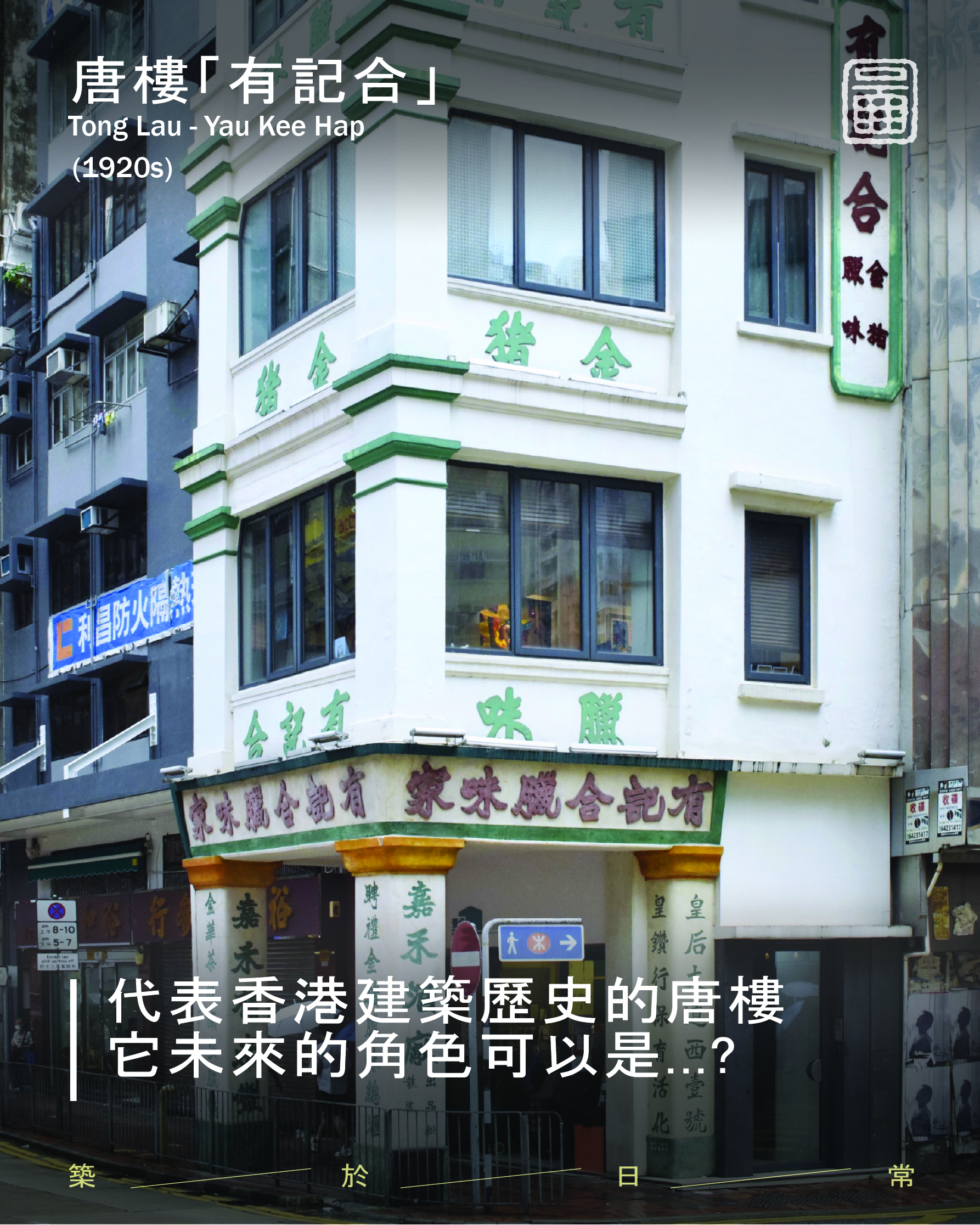

The tong lau, a hallmark of Hong Kong’s architectural history — but what roles might it take on in the future?
Date: 04 February 2026
Tong lau were built from the mid-19th century to the 1970s, bearing witness to the city’s transformation from a fishing port into an international metropolis. By government definition, a tong lau is “any building with domestic parts containing a living room designed or adapted for occupation by more than one tenant or sub-tenant.” Each generation of tong lau therefore reflects not only the architectural style of its time, but also the everyday lives and struggles of successive generations of Hong Kong people.
The development of tong lau can be traced through four main stages. The first generation, from 1841 into the early 20th century, was built mainly with brick and timber, often combining shopfronts with residences at the rear. Because these houses were lined up tightly along narrow lanes, they became known as “bamboo tube houses.” The second generation, during the Edwardian era, followed the plague of the early 1900s, when stricter hygiene requirements were introduced. Tong lau of this period featured more windows for ventilation and reinforced concrete verandahs to improve lighting and air circulation. The third generation, in the pre-war years, resembled Western-style townhouses in form, built of reinforced concrete and limited to four storeys. Finally, the fourth generation, from the 1950s to 1970s, was in modernist style, but with height restrictions relaxed to six or more storeys.
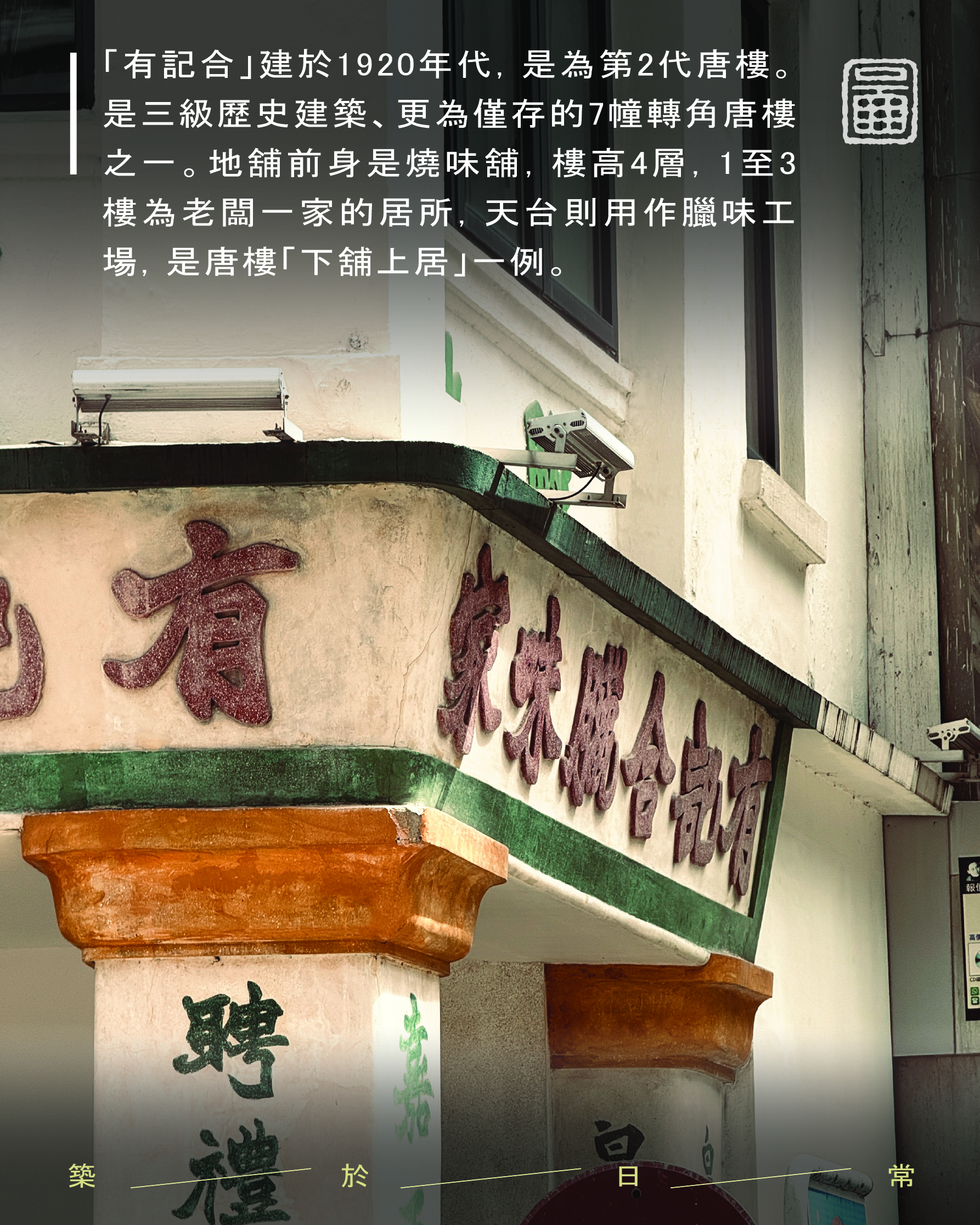
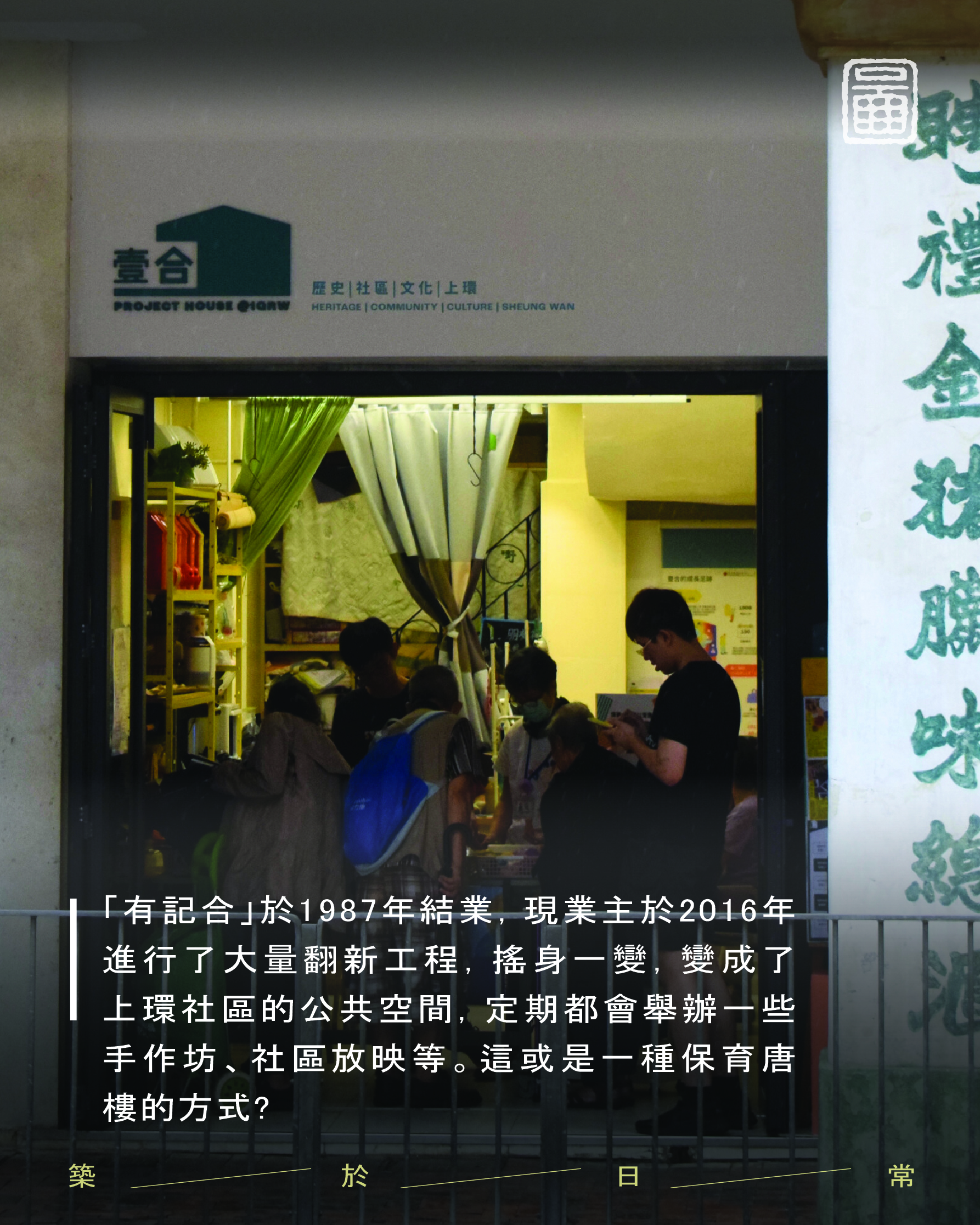
A representative example is “Number 1 Queen’s Road West,” also known as Yau Kee Hap, a second-generation tong lau built in or before 1926. In 2010, it was listed as a Grade III historic building, and is one of only seven remaining corner tong lau. Its ground floor once housed the famous Yau Kee roasted meat shop, with the owner’s family living on the upper floors, while the rooftop served as a workshop for preserved meats — a classic example of “shop below, residence above.” The shop closed in 1987, and in 2016 the building was acquired and carefully restored. Today, Yat Hap has been transformed into a community hub - Project House in Sheung Wan, operated by One Bite Design Studio, hosting regular workshops, community screenings, and cultural activities.
Text and Photography: @kongcept852 (Commissioned by HKIA)